Kara also isn’t inclined to be a superhero, although she does help young Ruthye Marye Knoll (Eve Ridley) when some bar lowlifes try to steal the sword that belonged to Ruthye’s father. But she declines Ruthye’s plea to help her find the man who slaughtered her family: a Brigand leader named Krem of the Yellow Hills (Matthias Schoenaerts). Kara changes her tune when Krem hijacks Kara’s ship and shoots Krypto with a poison dart. Poor Krypto will die in three days if she can’t retrieve the antidote from Krem. The two team up, one seeking a cure, the other revenge. There’s also some sex trafficking thrown in, just to drive home the villainy of the Brigands.
A super antihero?
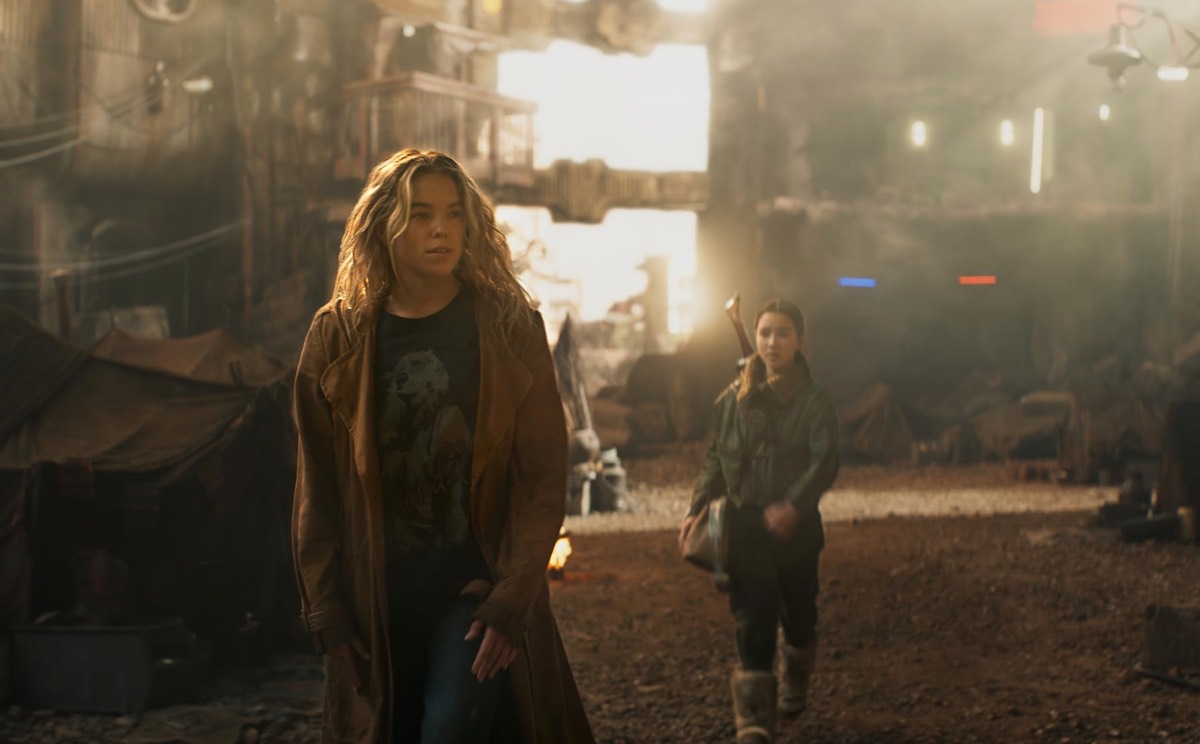




As with last year’s Superman, I was initially skeptical and then pleasantly surprised by how entertaining Supergirl proved to be. The plot is refreshingly straightforward without overpacking itself with super-character cameos like its predecessor. Like Kal-El, Kara must make peace with her past, but it’s a darker past, and hence so is the overall tone of the film. There are some humorous beats, but Supergirl works best when it’s not trying too hard to be funny.
The strongest segments were the flashbacks to Kara’s childhood on Argo City. In this telling, while Kal-El was evacuated to Earth as a baby right before Krypton was destroyed, Kara’s father, Zor-El (David Krumholtz), figured out how to dome off the city in a separate chunk so it survived; Kara was born under the dome. But the surviving Kryptons eventually start dying of radiation sickness from kryptonite under the city, including Kara’s mother, Alura (Emily Beecham). After her mother’s death—Krypto adopts Kara during the funeral procession—Zor-El sends them both off to join Kal-El on Earth. She’s more of a super antihero than her clean-cut cousin.